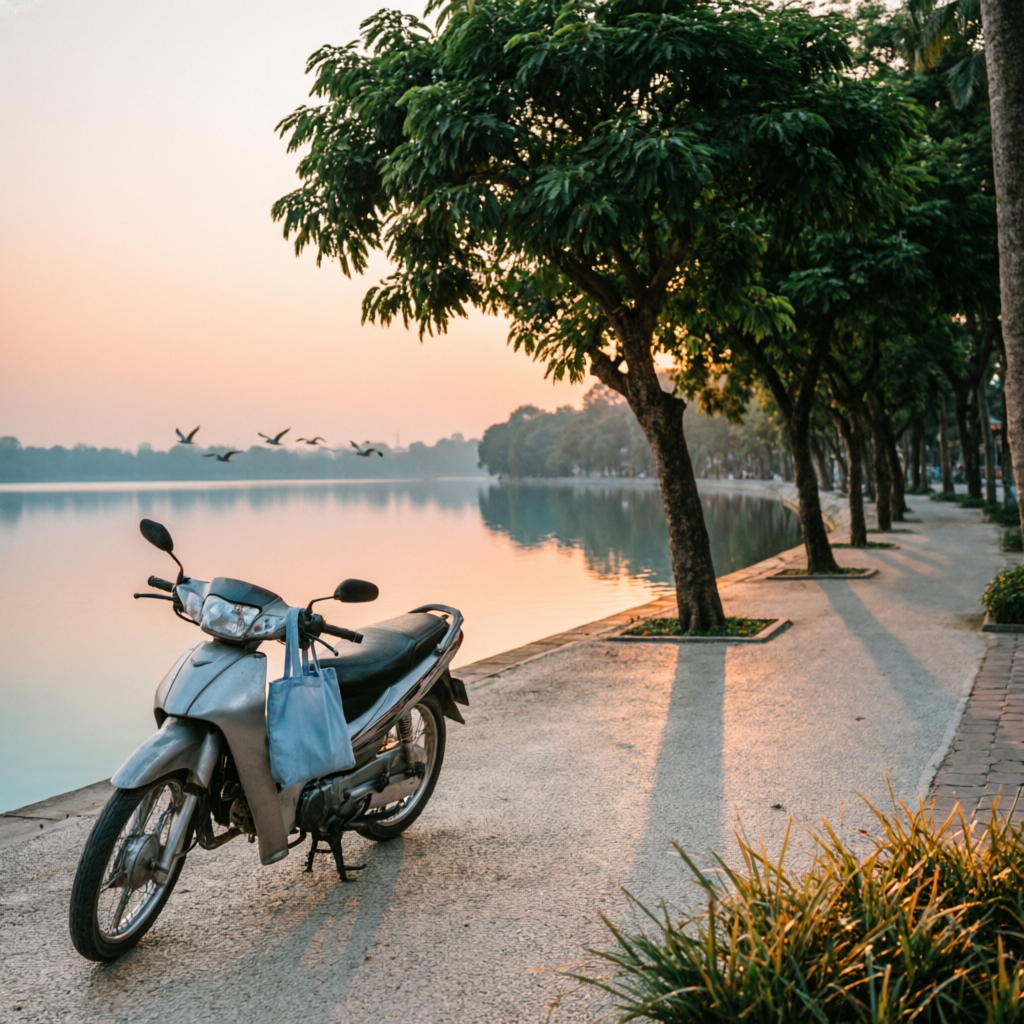
Rent a reliable motorbike in Hanoi with Nguyen Ha — Honda Wave, Honda Vision, Honda Air Blade and budget scooters, available by the day, the week or the month. Simple pickup in Long Bien, delivery on request, and clear published prices with no surprises.
🕗 Open 08:00–17:00, every day🛵 Daily · Weekly · Monthly rental📍 Alley 5 Đ. Nguyễn Văn Cừ, Long Biên🚚 Delivery on request
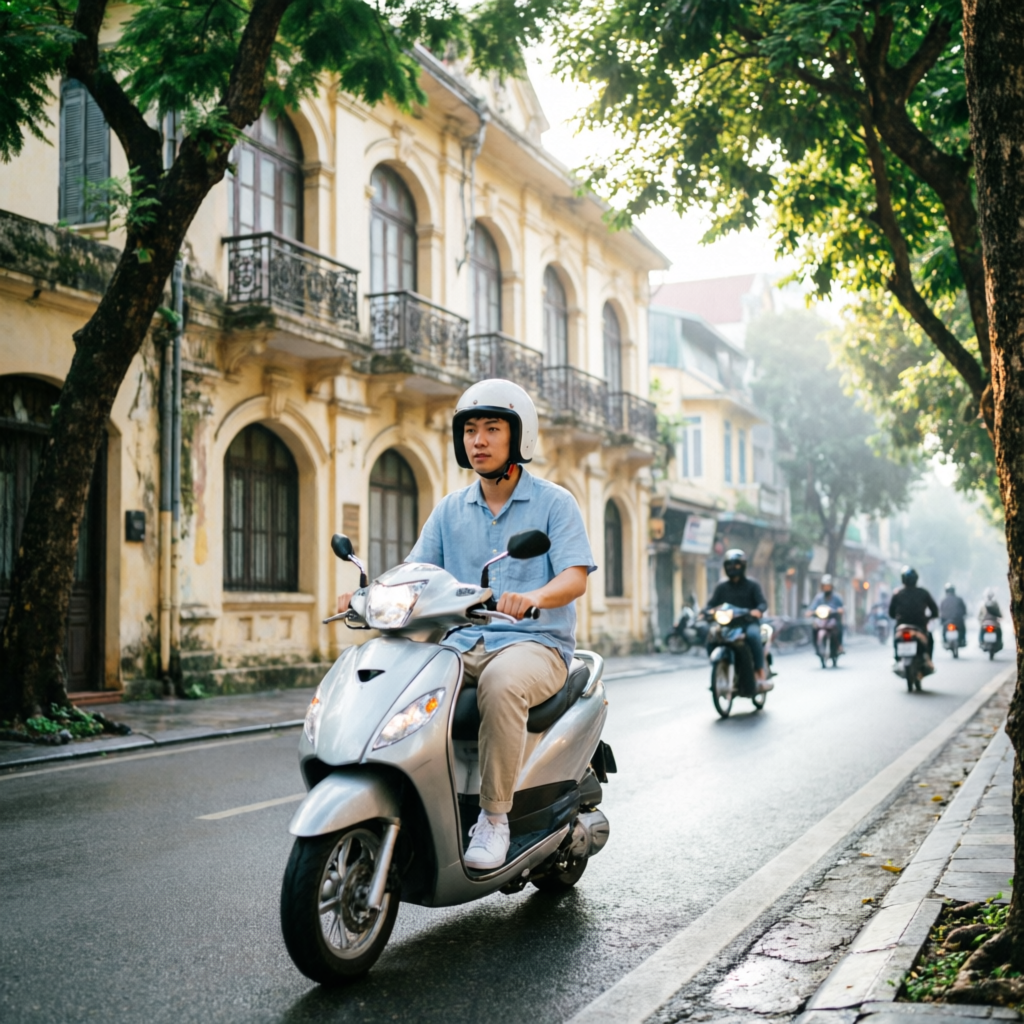
Illustrative image: riding a rented scooter through Hanoi.
Quick Information
Motorbike rental in Hanoi at a glance
Everything you need to know before you book, in one place. For anything not listed here, call or message and ask — answers are straightforward and in plain English.
🕗
Opening hours
08:00–17:00 every day, including Saturdays, Sundays and public holidays. Pickup and return are arranged inside these hours.
📍
Location
Alley 5 Đ. Nguyễn Văn Cừ, Street, Long Biên, Hà Nội, Việt Nam — on the east side of the Red River, near Long Bien Bridge.
📞
Phone & WhatsApp
Call 0334699969 for immediate booking, or send a WhatsApp message with your dates and preferred model for a quick written confirmation.
✉️
Email
motorbikenguyenha@gmail.com for longer enquiries, monthly rentals, or sending documents and itinerary details in advance.
🗓️
Rental periods
One day, one week or one month. Published rates for each period are listed in the pricing table below — no hidden line items.
🛵
Fleet classes
Manual motorbikes (Honda Wave), automatic scooters (Honda Vision, Honda Air Blade) and budget scooters (Click/Mio class).
Fastest way to bookSend one WhatsApp message with three details: (1) your dates, (2) the motorbike type you prefer, and (3) where you want to collect or receive the bike. You will get availability, the exact rate from the price list, and the documents to bring.
Pricing
Clear motorbike rental prices in Hanoi
These are the published rates for motorbike rental at Nguyen Ha. Prices are in Vietnamese dong (VND), written in the common local “k” shorthand (150k = 150,000 VND).
Motorbike rental prices per day, week and month at Nguyen Ha Hanoi
Motorbike Type
1 Day
1 Week
1 Month
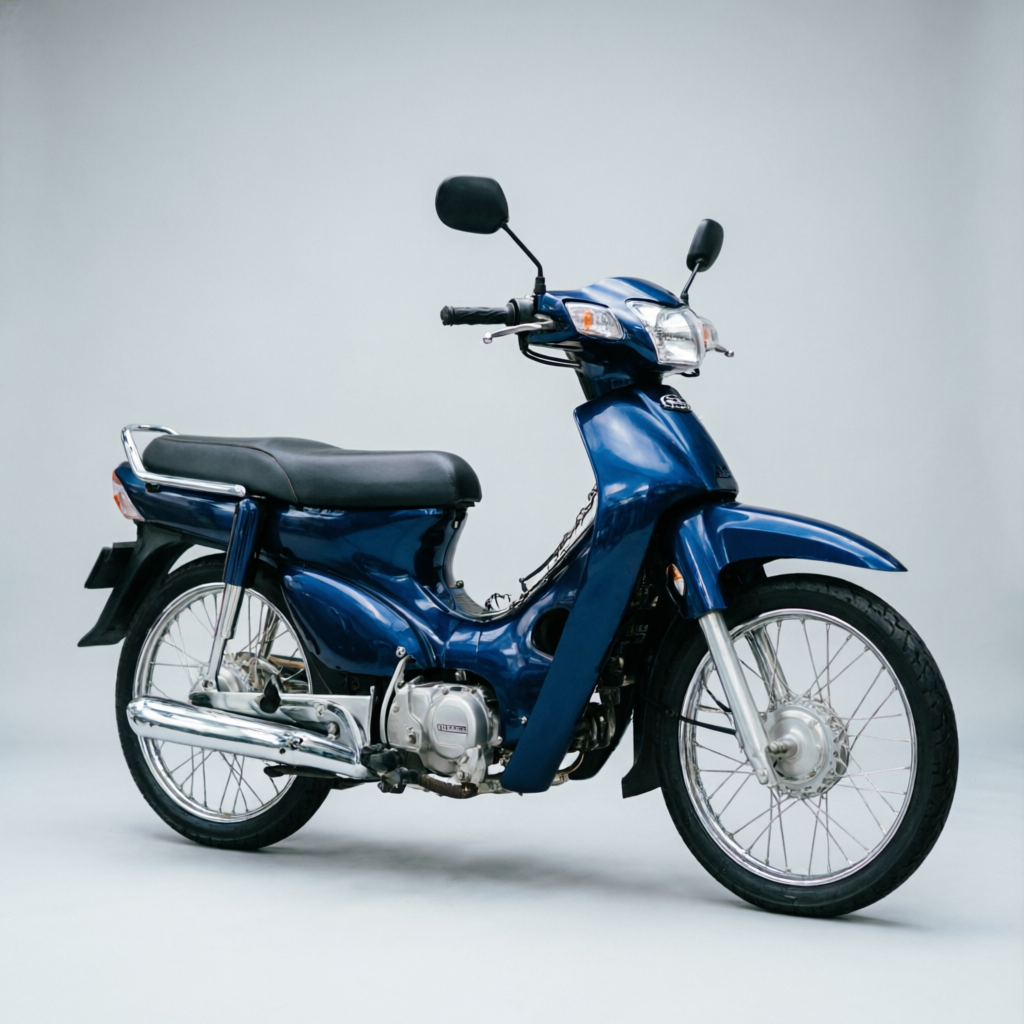
Honda Wave – Manual
150k VND
600k–700k VND
1,200k VND
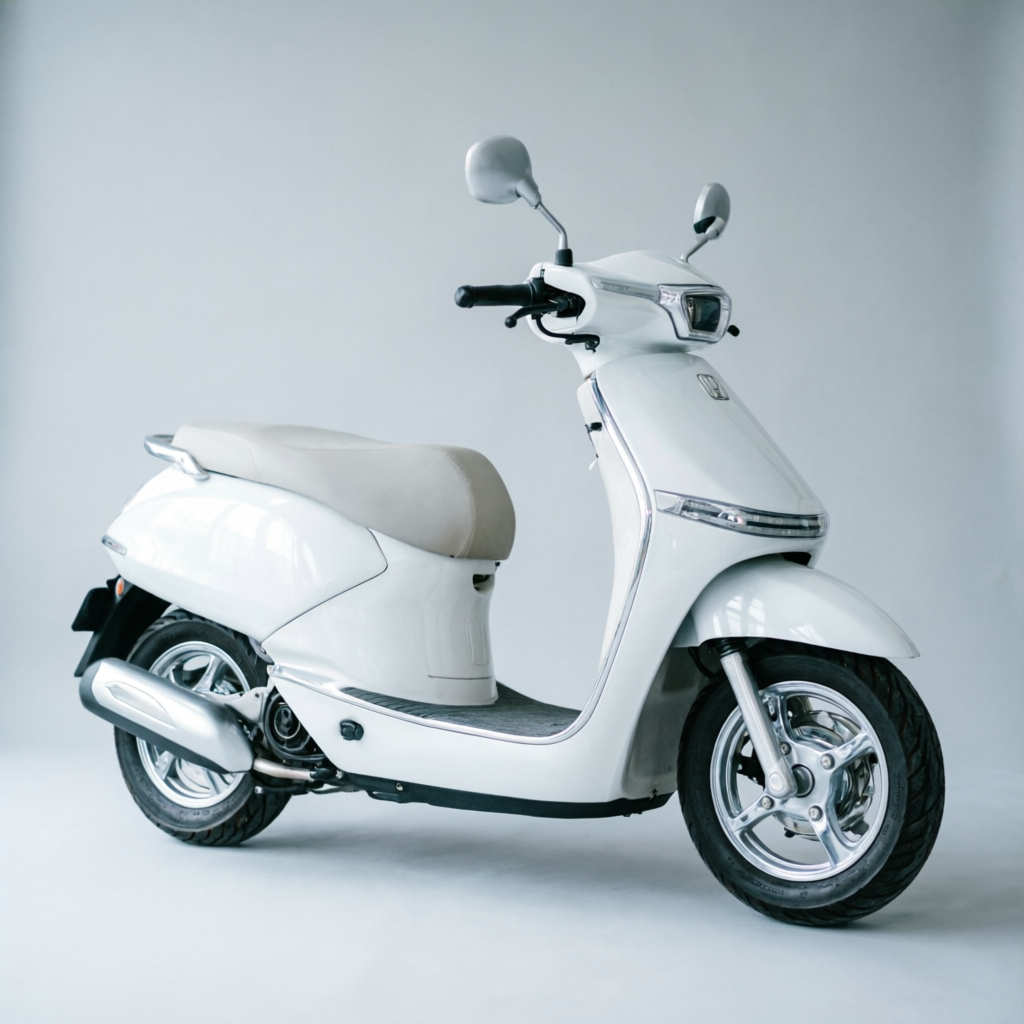
Honda Vision – Scooter
200k VND
800k–1,000k VND
1,800k–2,000k VND
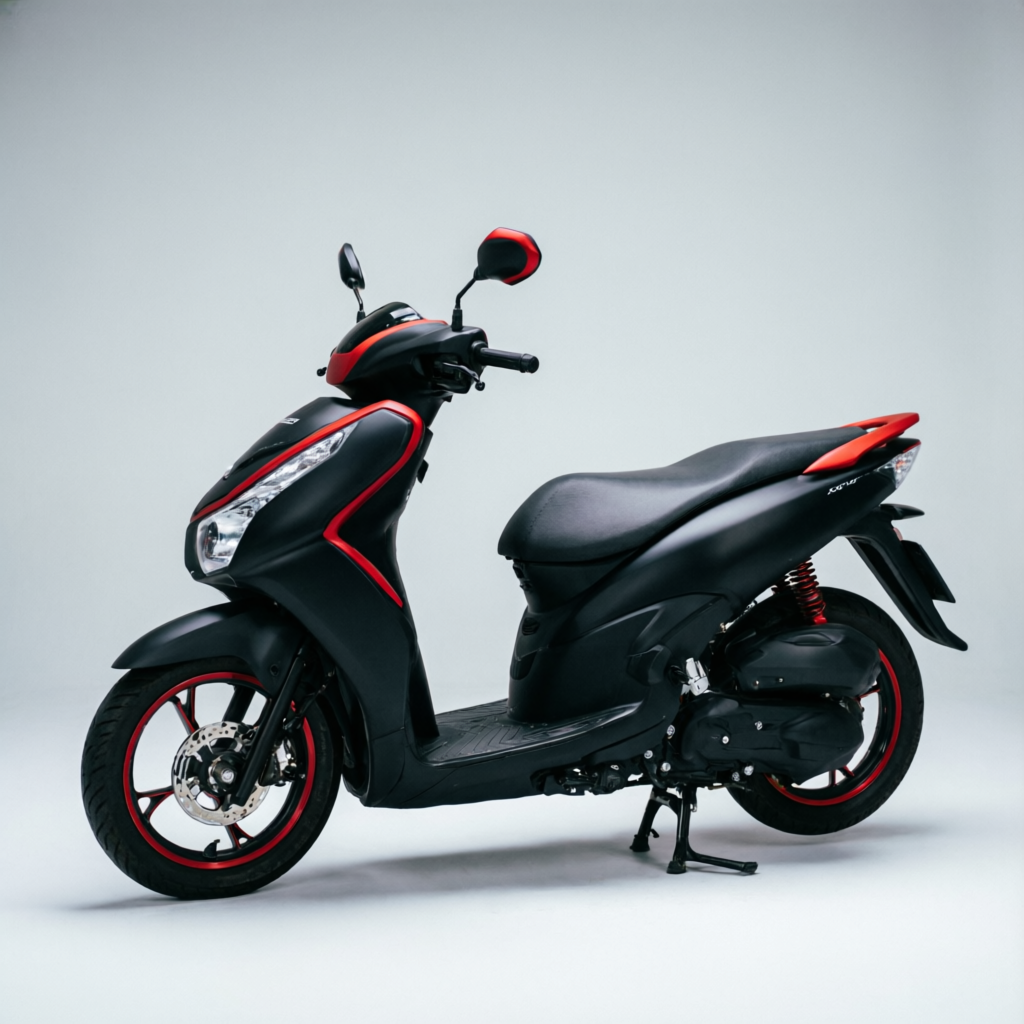
Honda Air Blade – Scooter
200k VND
800k VND
1,400k VND
Budget Scooter (Click/Mio)
150k VND
600k–700k VND
1,000k–1,200k VND
Cheap daily rental
From 150k VND per day, a single day of rental covers city sightseeing, coffee stops and an evening food run without paying tour prices.
Weekly value
A week of rental costs roughly the same as four to five single days on most models, which makes the weekly rate the sensible choice for a full Hanoi stay.
Monthly economy
Monthly rates work out dramatically cheaper per day. If you are studying, working remotely or staying a season in Hanoi, monthly rental is the economical option.
About price rangesSome models show a range (for example 600k–700k VND per week). The exact figure within the range depends on the specific bike and rental dates, and is confirmed at booking. Nothing outside this table is charged as “rental price”.
Four classes cover almost every rider: a light manual for confident budget riders, two automatic scooters for comfort and storage, and a budget scooter for simple city use.
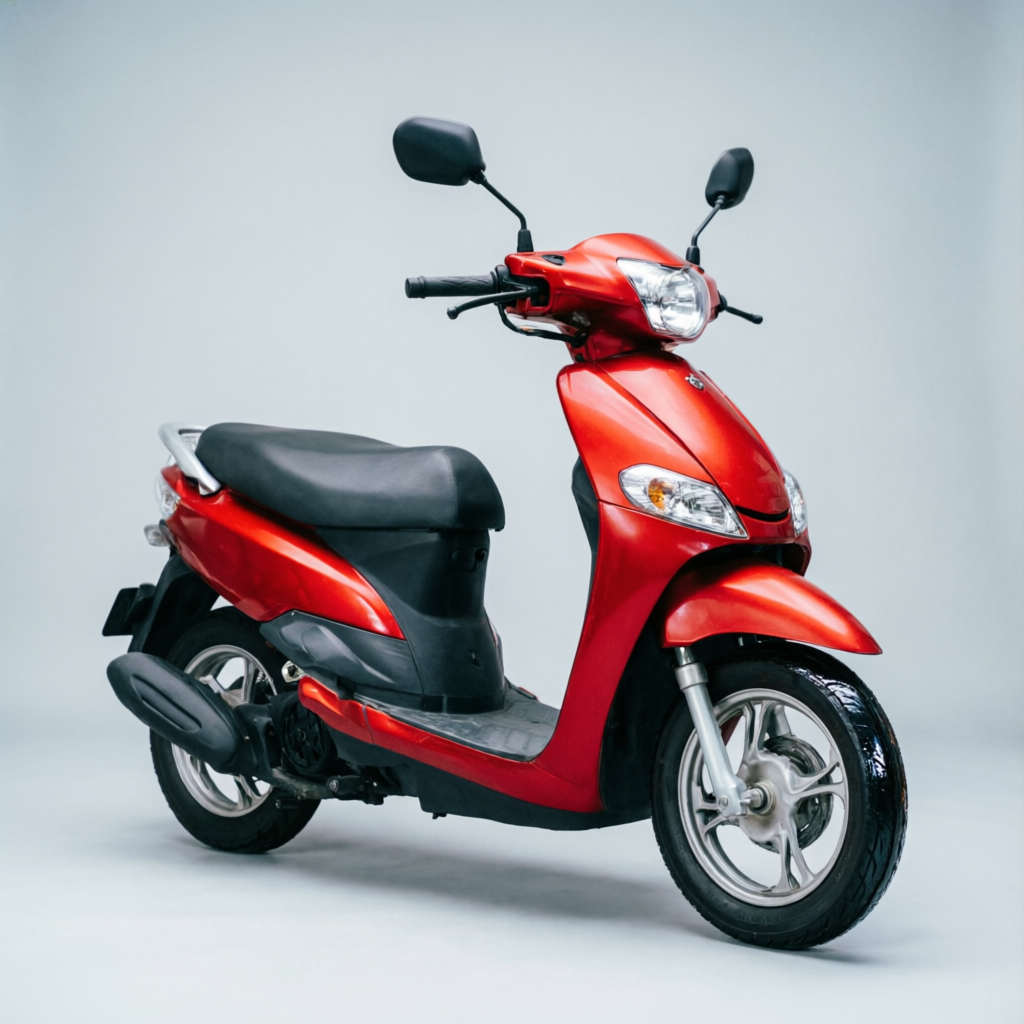
The Honda Wave is the classic Vietnamese underbone: light, narrow, fuel-frugal and easy to manoeuvre through tight alleys. Its semi-automatic gearbox rewards riders who already know how to shift gears, and its simple mechanics make it a favourite for long-distance riders on a budget. If you want cheap motorbike rental in Hanoi and you are comfortable with a clutch-less manual gearbox, this is the natural pick.
The Honda Vision is one of the most popular scooters on Hanoi streets: compact, smooth and fully automatic, with a flat-ish floorboard and an under-seat compartment for a jacket or a small bag. It is an excellent first scooter for tourists because it is narrow, light at stops, and predictable in traffic. Two riders fit comfortably for city distances.
The Honda Air Blade sits a step above in power and body size, with stronger acceleration for carrying a passenger, luggage or climbing out of the city towards day-trip roads. Its larger frame feels more planted at higher speeds, and the deeper storage compartment suits travellers carrying a laptop bag or camera gear. A balanced choice for mixed city-and-road use.
The budget scooter class (Honda Click / Yamaha Mio style) is the affordable automatic: simple, light and cheap to run. It is perfect for short hops across Hanoi — university areas, markets, cafés, the lake loop — and for monthly renters who want the lowest possible cost without learning a manual gearbox. Power is modest, so plan relaxed pacing with a passenger.
Lowest automatic pricing in the fleet
Very light and easy for smaller riders
Ideal for city errands and short commutes
Best cheap monthly rental option
Your situation
Recommended class
Why
First time on a scooter, city sightseeing
Honda Vision
Light, predictable, easy at stops and in crowds
Two riders plus bags, day trips
Honda Air Blade
More power and stability with a passenger
Experienced manual rider, long distance
Honda Wave
Light, frugal, proven on Vietnamese roads
Student or long-stay budget commute
Budget Scooter (Click/Mio)
Cheapest automatic for daily city use
Why Choose Nguyen Ha
A straightforward local rental point in Long Bien
Nguyen Ha is a local Hanoi motorbike rental business, not a marketplace or an aggregator. You talk directly to the people who hand over the keys.
🧾
Published prices
The rate table on this page is the rate table. Daily, weekly and monthly prices are stated openly so you can compare before you message.
🗣️
Direct communication
Phone, WhatsApp and email all reach the business directly. Questions about documents, deposit or delivery get answered by the rental team itself.
🕗
Open every day
08:00–17:00, seven days a week. Weekend arrivals and weekend returns fit inside the same schedule, which simplifies planning.
🧭
Practical local advice
Where to park near the Old Quarter, how to cross the bridges, when rain makes roads slippery — the kind of guidance locals give naturally.
🔁
Flexible periods
Start with a day, extend to a week, or settle into a month. Extending an existing rental is a message away rather than a new negotiation.
Clear paperwork
A simple rental contract and a clear explanation of the deposit before you ride, so both sides know exactly what was agreed.
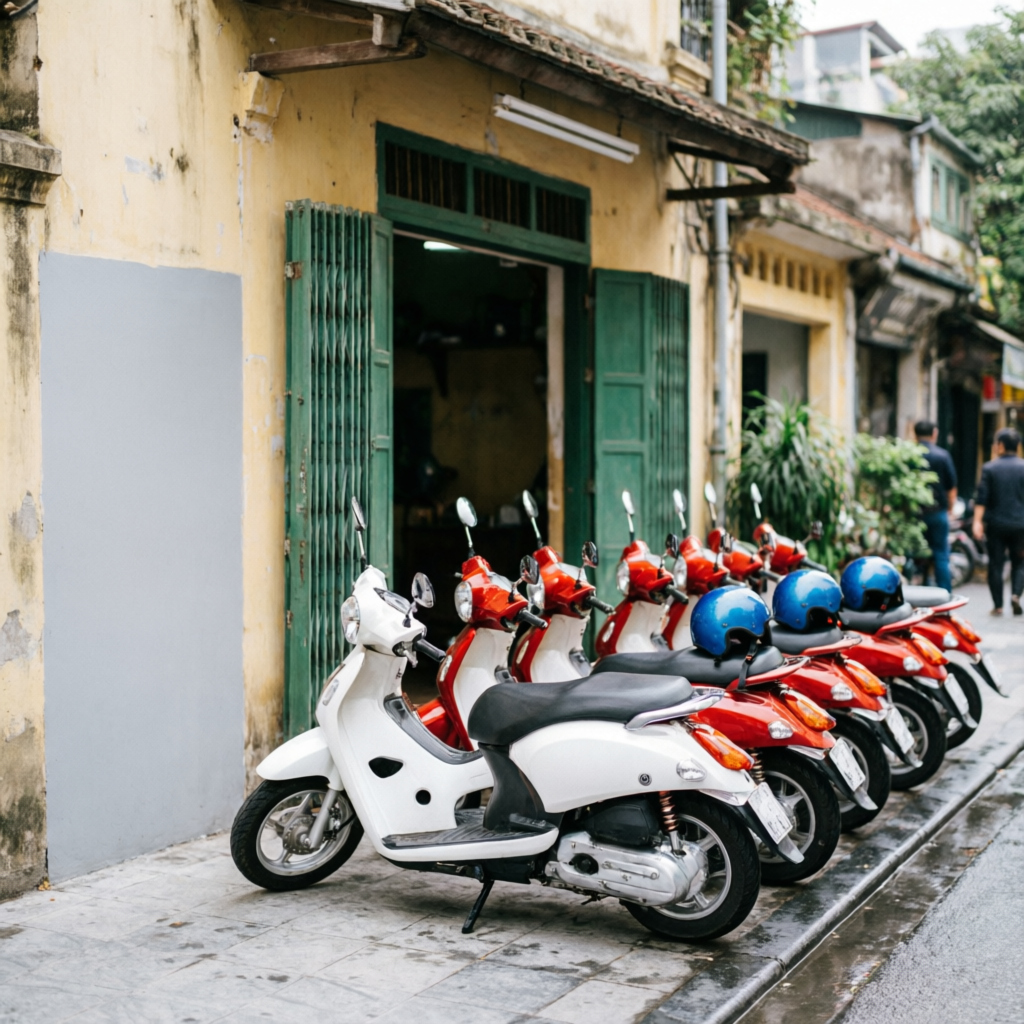
Illustrative image: a typical small motorbike rental shopfront in Hanoi.
How Renting Works
From first message to open road in five steps
Send your request
Call 0334699969, message on WhatsApp, or email motorbikenguyenha@gmail.com. Include your dates, preferred motorbike class, and whether you want pickup at the shop or delivery to your address in Hanoi.
Confirm the details
You receive confirmation of availability, the exact rate from the published table, the documents to bring, and the deposit arrangement for your chosen bike and duration. Anything unclear gets answered before you commit.
Check the motorbike together
At handover you inspect the bike with the staff: brakes, lights, indicators, horn, mirrors, tyre condition and fuel level. Existing scratches are noted or photographed so there is no dispute at return.
Sign the contract and ride
You sign the simple rental contract, settle the deposit arrangement as agreed, receive the keys and documents kept with the bike, and you are off. First-time riders can ask for a quiet street nearby to get a feel for the bike.
Return or extend
Bring the bike back within opening hours (08:00–17:00) at the end of your period, or message ahead to extend. The bike is checked against the handover notes and the deposit arrangement is settled as agreed in the contract.
Illustrative image: key handover at pickup.
Rental Requirements
What you need to rent a motorbike in Hanoi
Requirements exist to protect both you and the bike. Here is the honest picture of what renters are asked for, and what to verify for your own situation.
Typical renter checklist
Valid identification (passport for foreign visitors, national ID for Vietnamese customers)
Contact details and your address in Hanoi (hotel, homestay or apartment)
Rental dates and preferred motorbike class
Agreement to the rental contract terms at handover
Ability to ride the chosen bike safely — manual or automatic
Licensing: check before you fly
Vietnam has its own rules on who may legally drive a motorcycle, and the rules that apply to a foreign licence or an International Driving Permit depend on your nationality and licence category. These rules change over time and are enforced by police on the road.
Before travelling, check the current requirements with official sources (for example your embassy or Vietnamese traffic authorities). Renting a motorbike is easy; riding legally is your responsibility, and travel insurance coverage often depends on it too.
Honest caveatNguyen Ha provides the motorbike and the rental agreement; it cannot verify or guarantee your legal eligibility to drive in Vietnam. If you are unsure whether your licence is accepted, resolve that question before booking — not at the roadside.
Documents
Documents required for motorbike rental
Question → answer: What documents do I need? Identification plus contact and rental details. For most foreign travellers that means a passport; for Vietnamese renters, a national ID card.
What is usually asked for
Passport (foreign visitors) — shown at handover; the rental arrangement for keeping or copying it is agreed in the contract.
National ID / CCCD (Vietnamese customers).
Local address and phone number — where you are staying in Hanoi.
Driving licence — presented where applicable to your situation; see the licensing note above.
Practical tips
Keep a photo of your passport ID page on your phone as a backup.
If your hotel holds your passport, arrange this in advance and tell the rental team what you can provide instead.
Bring the same documents you confirmed by WhatsApp, so handover takes minutes.
Ask at booking if your situation is unusual (group bookings, long monthly stays, corporate use).
Deposit
How the deposit works
Question → answer: Is a deposit required? A deposit or holding arrangement is a normal part of motorbike rental in Hanoi, and it is agreed with you at booking before you ride.
The purpose of a deposit is simple: it secures the motorbike during your rental period and covers the business against loss or damage beyond normal wear. In Hanoi practice, deposits may take the form of a cash amount, an identity document held for the rental period, or a combination — what applies in your case depends on the motorbike class, the rental duration and your situation.
What to clarify when booking
Which deposit form applies to your rental (cash, document, or both)
The exact amount or document involved, written into the contract
The condition notes taken at handover (scratches, dents, fuel level)
How and when the deposit is returned or released at the end of the rental
Protect yourself in 60 secondsBefore riding away, walk around the bike with your phone and photograph or film existing damage, and make sure those marks match the notes on the contract. This one habit prevents almost every deposit dispute anywhere in the world.
Rental Contract
The rental contract, explained plainly
Every rental is covered by a simple written agreement signed at handover. It records what was rented, for how long, at what price, and under which conditions.
What the contract records
Renter identity and contact details
Motorbike identification and its condition at handover
Rental period (day, week or month) and the agreed rate from the price list
Deposit arrangement and return conditions
Renter responsibilities: lawful use, safe keeping, return in agreed condition
Read-before-you-sign habits
Check that the dates and price match what you confirmed by message.
Check that handover damage notes match the photos you took.
Ask what happens if you return late or extend — before signing.
Keep your copy of the contract until the deposit is fully settled.
A contract is not bureaucracy; it is the reason both sides can relax. If a term is unclear, ask at handover — it is far easier to clarify in the shop than over the phone a week later.
Delivery
Motorbike delivery in Hanoi, on request
Question → answer: Can the motorbike be delivered? Yes, delivery can be arranged on request. Because availability, area and cost depend on where you are and when you need the bike, delivery details are confirmed at booking rather than promised in advance.
How to request delivery
Send your exact address (hotel name, street, district) by WhatsApp or phone
State the date and time window you want the bike
Receive confirmation of whether delivery is possible for that location and time, and any applicable arrangement
Meet the bike at the agreed point, inspect it together, sign and ride
Where delivery is commonly requested
Renters staying around the Hanoi Old Quarter, Hoan Kiem, Ba Dinh, Tay Ho (West Lake), Long Bien, Bo De, Gia Lam and the Ocean Park area frequently ask about delivery, as do arrivals planning around Noi Bai Airport. Whether a specific address can be served at a specific time is confirmed case by case — message the address and you will get a direct yes or no with the arrangement.
Tip for groups and familiesIf you need two or more bikes at the same address, say so in your first message. Coordinating multiple handovers is much easier when planned ahead than when arranged at the doorstep.
Airport Information
Renting a motorbike when flying into Noi Bai Airport
Question → answer: Can I rent near Noi Bai Airport? Nguyen Ha's rental point is in Long Bien, not inside the airport. Travellers landing at Noi Bai (HAN) typically plan one of three approaches below.
1. Transfer first, ride next morning
Take your usual airport transfer to your accommodation, rest, and collect or receive the motorbike from 08:00 the next day. This is the calmest option after a long-haul flight.
2. Same-day start, planned ahead
Message your flight arrival details before you land. If your landing fits inside opening hours (08:00–17:00) and travel time allows, a same-day handover can be arranged at an agreed point.
3. End-of-trip return planning
If your flight leaves outside opening hours, plan the bike return for the previous evening or the morning of your flight within 08:00–17:00, then transfer to the airport as usual.
Practical note: Hanoi traffic around arrival and departure peaks is heavy, and navigating an unfamiliar city straight off a long flight is tiring. Most first-time visitors choose option 1 and start riding fresh. Whatever you choose, put your flight number and times in your booking message so the arrangement matches reality.
Rental Duration
Daily, weekly or monthly: choosing your period
Daily rental
Best for a single sightseeing day, a food crawl, or a specific errand. Daily rates: Honda Wave 150k, Vision 200k, Air Blade 200k, budget scooter 150k VND. If your plans might stretch, ask about extending mid-rental instead of rebooking.
Weekly rental
The sweet spot for a typical Hanoi trip: enough time for the Old Quarter, the lake loops, and one or two day trips. Weekly rates run 600k–1,000k VND depending on model, usually below the cost of paying single days across a full week.
Monthly rental
For students, interns, remote workers and long-stay travellers. Monthly rates from 1,000k to 2,000k VND turn a motorbike into a daily commuter at a cost per day that beats ride-hailing for regular use.
Matching period to itinerary
Itinerary pattern
Sensible period
Notes
One-day city highlights
1 day
Pick up at 08:00, return by 17:00 the same day
3–6 day Hanoi stay with a day trip
1 week
Covers the whole stay with buffer days for weather
Two-week northern Vietnam loop
1 week ×2 or discuss
Message your route; long routes suit Air Blade or Wave
Semester abroad / work stint
1 month
Lowest cost per day; extension by message
Riding in Hanoi
How Hanoi traffic actually works
Hanoi traffic looks chaotic from the sidewalk and feels surprisingly orderly from the saddle. Understanding its logic is the single biggest safety upgrade for a new rider.
Flow over stops
Traffic moves as a continuous stream. Riders merge by entering slowly and steadily, keeping speed consistent so others can predict and flow around you. Sudden stops and sudden swerves are what cause contact.
Right side, right turns
Keep to the right. When turning, signal early and drift gradually across the stream rather than cutting. At big intersections, watch how locals position before the light changes and mirror that positioning.
Horn as information
A short horn tap usually means “I am here” — before overtaking or entering a blind junction. It is communication, not anger. Use yours the same way, sparingly and early.
Crossings and doors
Expect pedestrians crossing in steady streams, vehicles emerging from alleys, and doors opening from parked cars. Cover the brakes near markets, school gates and café strips where movement is unpredictable.
First-day routine for new riders
Start on quiet side streets in Long Bien to learn the throttle and brakes
Practise one U-turn and one alley exit before joining bigger roads
Ride your first busy crossing behind an experienced local rider in the stream
Avoid rush-hour peaks and rain on day one
Keep both hands on the bars and phones in a mount or pocket, never in hand
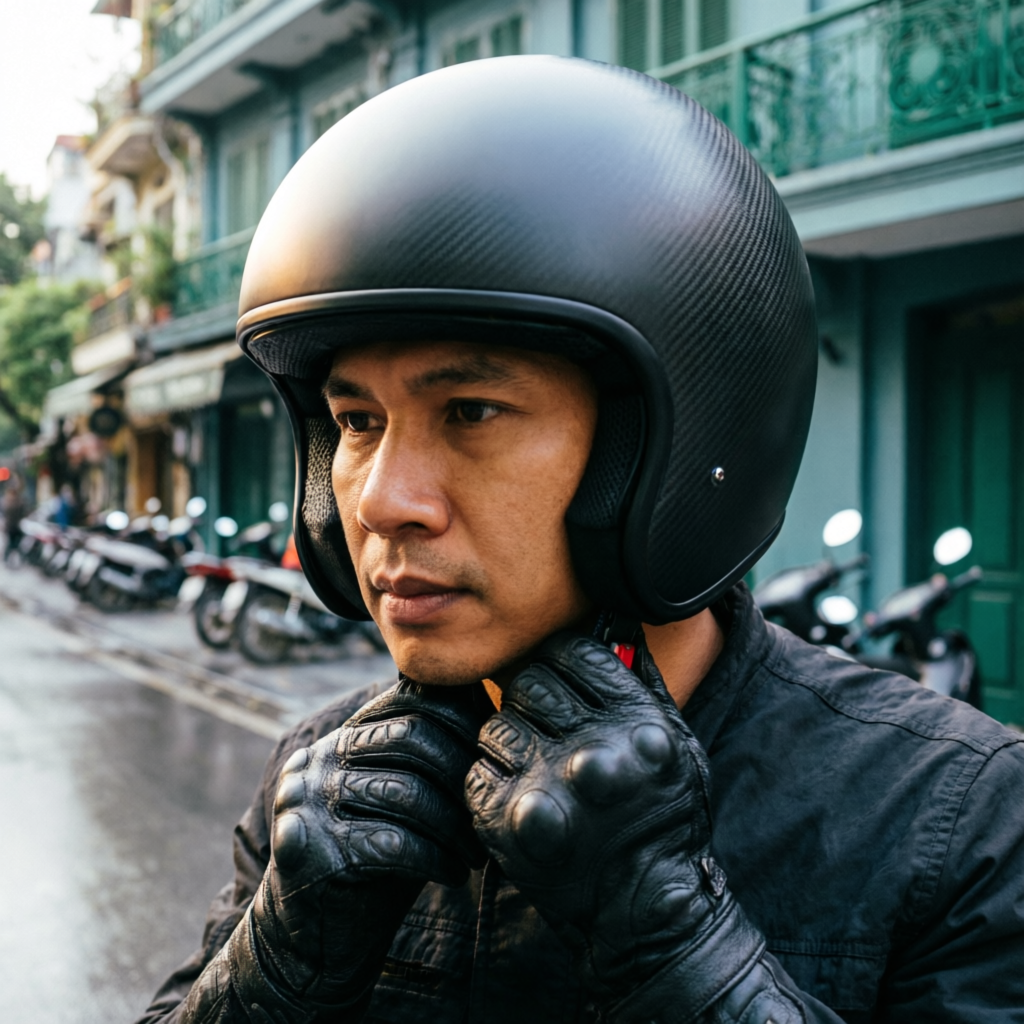
Illustrative image: helmet on, straps tight — the non-negotiable habit in Hanoi.
Local Areas
Hanoi areas riders ask about most
Where the rental point sits, and how the neighbourhoods around Hanoi connect by motorbike.
Long Bien
Home base. Long Bien sits on the east bank of the Red River, a residential district of wide streets, markets and cafés with easier parking and calmer side streets than the central wards — a friendly place to learn a rental bike.
Bo De & Nguyen Van Cu
The Nguyen Van Cu corridor and the Bo De ward area form the immediate local grid around the rental point: fuel stations, food streets and river-side routes, all useful in the first hour of any rental.
Long Bien Bridge
The historic steel bridge linking the east bank to the Old Quarter side. Crossing it once is a Hanoi rite of passage; ride its narrow lanes slowly and give pedestrians and trains the respect they deserve.
Hoan Kiem & the Old Quarter
The postcard centre: Hoan Kiem Lake, the weekend walking streets, and the dense shophouse lanes of the Old Quarter. Riding here means slow speeds, tight lanes and careful parking — plan parking before you arrive.
Ba Dinh
The civic heart with broad boulevards and monumental spaces. Roads are wider and calmer than the Old Quarter, making it a comfortable introduction to central Hanoi riding.
Tay Ho (West Lake)
The lakeside expat district west of the centre. The loop around West Lake is a classic easy ride with cafés and sunset viewpoints — ideal for a first evening on a scooter.
Gia Lam
East of the river, Gia Lam spreads into quieter semi-rural roads where new riders can build confidence away from dense traffic, and where day-trip routes towards the north-east begin.
Ocean Park
The modern lakeside development zone on the eastern side of the river, with open boulevards and new infrastructure — a contrast ride to the old city, popular with long-stay renters.
Illustrative image: Long Bien Bridge at golden hour.
Tourist Use Cases
Motorbike rental for tourists: typical plans that work
Question → answer: Can tourists rent motorbikes in Hanoi? Yes — tourists are a core part of Hanoi's rental market. Below are realistic itineraries matched to bike classes and periods.
The 48-hour city sampler
Two days on a Vision or budget scooter: Old Quarter morning coffee, Hoan Kiem Lake loop, Ba Dinh monuments, West Lake sunset, and a night market evening within walking distance of your parked bike. Daily rental, returned each evening.
The one-week Hanoi deep dive
A week on an Air Blade or Vision: city days plus one or two day trips (mountain roads, craft villages, lakeside towns), with weather buffer days built in. Weekly rate keeps the cost per day low.
The northern loop starter
Experienced riders heading into the northern provinces often choose the Wave or Air Blade for its balance of frugality and stamina. Plan stages conservatively, check weather, and respect mountain-road conditions.
The long-stay commuter
Students and remote workers base themselves in Tay Ho, Ba Dinh or Long Bien and rent monthly: market runs, café work sessions, weekend lake loops — a motorbike becomes daily infrastructure at a fraction of ride-hailing costs.
Travel insurance reminderMany travel insurance policies exclude motorcycle riding unless you hold a valid licence for the vehicle class and wear a helmet. Read your policy's motorbike clause before your trip, and ride within what it covers.
Hanoi Destinations
Places in Hanoi worth reaching by motorbike
Hoan Kiem Lake
The city's living room. Ride early morning for tai chi and joggers, or evening for lights and street food; park in attended lots a block away and walk in.
Hanoi Old Quarter
Thirty-six streets of crafts, cafés and commerce. Best experienced at walking speed — park at the edge and explore on foot; the lanes reward slow eyes.
West Lake (Ho Tay)
A full loop ride with pagodas, cafés and sunset benches. The smooth lakeside road is a favourite first ride for new scooter renters.
Ba Dinh square area
Wide, orderly avenues and historic sites. An easy confidence-builder ride from Long Bien across the river.
Long Bien Bridge & river side
Cross at sunrise for photographers' light; continue to the east-bank food streets for a local breakfast afterwards.
Local markets & food streets
Market runs are where a rented scooter shines: basket on the hook, bags on the floorboard, home in minutes instead of waiting for a ride.
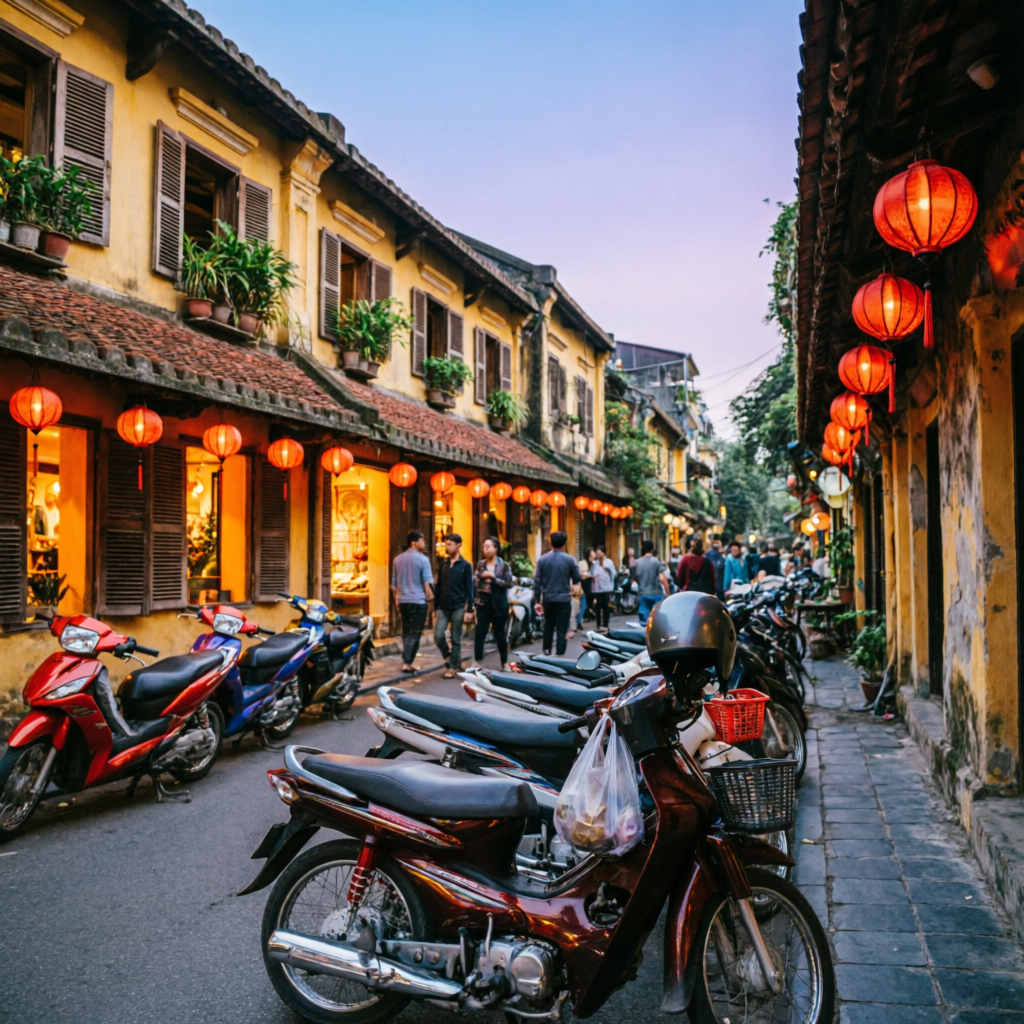
Illustrative image: parked scooters in an Old Quarter lane at dusk.Illustrative image: a quiet evening on the West Lake promenade.
Day Trips
Hanoi day trips by motorbike
Hanoi is surrounded by mountains, lakes, craft villages and limestone landscapes that make some of Vietnam's best riding. Choose targets that match your experience and the daylight you have.
Mountain roads to the north and west
Cooler air, terraced hillsides and winding passes define the northern provinces. These roads reward early starts, conservative cornering and a bike with reserve power — the Air Blade or Wave suit riders heading out for the day.
Limestone landscapes to the south
The river-and-karst scenery south of Hanoi is a classic first day trip: mostly flat highways out, then quiet local roads between limestone formations and boat points. An easy rhythm for two riders on a scooter.
Craft villages and riverside lanes
Within a short radius of the city, village roads connect pottery, silk and woodcraft villages. Narrow, slow and full of small bridges — perfect for a relaxed half-day with camera stops.
Lakes, temples and tea hills
National-park fringes, temple complexes and tea-covered hills make gentle full-day loops with lunch stops. Check opening days of specific sites before committing your whole day to one gate.
Day-trip planning checklist
Leave early; return before dark — unlit rural roads at night are a different sport
Check the weather forecast and radar; mountain weather turns faster than city weather
Start with a full tank and top up whenever the gauge hits half in rural areas
Carry rain jackets even on clear mornings
Tell someone your rough route and expected return time
Keep the rental contract and shop phone number saved on your phone
Illustrative image: northern Vietnam's winding roads are the reward for an early start.
Safety
Hanoi motorbike safety: the habits that matter
Question → answer: What are the safest ways to ride in Hanoi? Moderate speed, constant prediction, helmet always, and respect for wet surfaces. Everything else is detail.
Non-negotiables
Helmet on every ride, strap fastened — for driver and passenger, as the law requires
Closed shoes; sandals and flip-flops lose arguments with footpegs and asphalt
Lights on in rain and at dusk; indicators before every lane change and turn
No phone in hand, ever; use a mount or stop fully to check maps
Zero alcohol before riding — enforcement and physics are both strict
Prediction habits
Scan 20–30 metres ahead, not just the wheel in front of you
Assume any parked vehicle may pull out and any alley may emit a scooter
Give buses and trucks a wide berth; their blind spots are real
Slow before intersections even on green — crossers run late
In rain, double following distance and avoid painted lines and metal plates
If something goes wrong
For a mechanical issue or a fall, move yourself and the bike out of the flow first, then call the rental number 0334699969 — the contract lists what to do, and the shop is your first call for bike-related problems. For injuries, seek medical help first and paperwork second. Keep a screenshot of the shop address in Vietnamese on your phone to show drivers or helpers if needed.
Weather
Riding through Hanoi's four seasons
Hanoi has a distinct seasonal rhythm, and each season changes how a motorbike day feels. Planning around it is easier than fighting it.
Spring
Cool, damp and drizzly. Light rain gear and slower cornering suit the persistent mist; mornings can stay grey until noon.
Summer
Hot with heavy afternoon downpours. Ride early, shelter mid-afternoon, and expect slick roads and puddles hiding potholes for the first hour of rain.
Autumn
The celebrated season: dry air, gentle light, comfortable riding temperatures. The best window for long day trips and photography loops.
Winter
Cool to cold with persistent drizzle in the north. Layers and gloves matter more than power; metal bridge decks get slippery when damp.
Rain rule of thumbThe first thirty minutes of rain are the most slippery, as dust and oil lift off the surface. If a storm starts, the safest move is often a coffee stop until the initial wash passes — Hanoi's café culture was practically invented for this.
Fuel
Fuel: costs, stations and habits
Fuel is the main running cost on top of rental, and for scooters in this class it stays modest even with daily use.
Start each day knowing your fuel level; handover notes record it and return follows the same convention
Use branded fuel stations in the city; on day trips, top up at any station before rural stretches
Small scooters sip fuel; a city day typically costs less than a coffee-and-cake stop
Avoid roadside bottle sellers for anything beyond an emergency top-up
If the gauge behaves oddly, mention it at handover rather than discovering it on a mountain road
Practical etiquette: at stations, staff usually fill for you; switch the engine off and stay off the phone. Keep small notes handy so payment takes seconds.
Parking
Parking a rental motorbike in Hanoi
Parking in Hanoi is organised, cheap and everywhere — once you know the system.
Attended parking lots (bãi giữ xe)
Marked lots with attendants issue a small tag or ticket for your bike; you pay a modest fee on exit. Use these at markets, malls, lakeside points and attractions. Keep the tag — it is your claim.
Street and café parking
Many cafés and shops have a front strip with a watcher or a simple arrangement; a small fee or a purchase covers it. When in doubt, ask “giữ xe không?” (do you keep bikes?) and follow the point.
Parking habits that prevent trouble
Lock the steering and use any provided lock; remove loose items and bags
Photograph your parking spot's surroundings in dense areas
Never block alley mouths, shop entrances or pedestrian lanes
In the Old Quarter, park at the edge and walk the last 200 metres
Overnight, use your accommodation's parking or an attended lot agreed with your host
FAQ
Frequently asked questions about motorbike rental in Hanoi
Direct answers first, details after. Anything missing? Ask on WhatsApp — 0334699969.
Where can I rent a motorbike in Hanoi?
You can rent from Motorbike Rental Nguyen Ha at Alley 5 Đ. Nguyễn Văn Cừ, Street, Long Biên, Hà Nội, Việt Nam, open 08:00–17:00 every day.
The shop suits collectors from anywhere in the city, and renters who prefer not to travel can request delivery to their address at booking time.
Daily rates start at 150k VND (Honda Wave manual and budget Click/Mio scooters) and 200k VND for Honda Vision and Honda Air Blade scooters.
Weekly rates run 600k–1,000k VND and monthly rates 1,000k–2,000k VND depending on model. The full table is in the pricing section; nothing outside it is charged as rental price.
What documents are required to rent a motorbike?
Identification — typically a passport for foreign visitors or a national ID for Vietnamese customers — plus your local address and contact details.
Where a driving licence applies to your situation, bring it. Because licensing rules for foreign riders vary by nationality and change over time, verify your own eligibility with official sources before travel. See documents and requirements.
Is a deposit required?
Yes, a deposit or holding arrangement is part of the rental, agreed with you at booking and written into the contract.
The form and amount depend on the motorbike class and rental duration. Clarify it in your first message so there are no surprises at handover. Details: deposit section.
Can I rent a motorbike by the day?
Yes. One-day rental is available on every class: Wave 150k, Vision 200k, Air Blade 200k, budget scooter 150k VND per day.
Pickup and return both happen within opening hours (08:00–17:00).
Monthly rental suits students, interns, remote workers and long-stay travellers; extensions are arranged by message.
Can motorbikes be delivered?
Delivery can be arranged on request. Send your exact address and desired time window; availability and any applicable arrangement are confirmed for your specific location and dates.
Common request areas include the Old Quarter, Hoan Kiem, Ba Dinh, Tay Ho, Long Bien, Bo De, Gia Lam and Ocean Park. See delivery.
Can tourists rent motorbikes in Hanoi?
Yes. Tourists rent motorbikes across Hanoi for city days and northern loops, and Nguyen Ha's price list and periods are built around short and long visitor stays.
The caveat that matters: licensing legality and insurance coverage are the rider's responsibility — check both for your nationality and policy before riding.
Where can I rent a motorbike near Hanoi Old Quarter?
The nearest Nguyen Ha rental point is in Long Bien, across the Red River from the Old Quarter, at Alley 5 Đ. Nguyễn Văn Cừ.
Old Quarter visitors typically either collect the bike at the shop (a straightforward ride across the river) or request delivery to their hotel or homestay at booking time.
Where can I rent a motorbike in Long Bien?
At the Nguyen Ha point on Nguyen Van Cu, Long Bien — open 08:00–17:00 daily. It is convenient for riders based on the east bank, near Long Bien Bridge, Bo De and Gia Lam.
Can I rent a motorbike near Noi Bai Airport?
The rental point is in Long Bien rather than at the airport. Arriving travellers usually transfer to their accommodation first and start riding from 08:00 the next day, or plan a same-day handover in advance if their landing fits opening hours.
Put your flight details in the booking message so the arrangement matches your arrival. See airport information.
What should tourists know before riding in Hanoi?
Traffic flows continuously and merges by prediction; helmets are legally required; rain changes everything about grip; and parking is cheap and attended almost everywhere.
Start slow on quiet streets, keep to the right, signal early, and treat the first day as training. Full guidance: riding in Hanoi and safety.
What are the safest ways to ride a motorbike in Hanoi?
Moderate, steady speed; helmet and closed shoes; indicators before every move; generous following distance; extra caution in the first rain; and full attention — no phone in hand.
Prediction beats reaction: scan ahead, assume alleys and parked cars will move, and give large vehicles space.
What are the opening hours?
08:00–17:00 every day, including weekends and public holidays. Pickup, return and extensions are arranged inside these hours; messages sent outside them are answered during the next opening period.
How do I book?
Call 0334699969, message the same number on WhatsApp, or email motorbikenguyenha@gmail.com with your dates, preferred class and pickup or delivery location.
You will receive availability, the exact rate from the published table, and the documents and deposit arrangement for your rental. See how renting works.
Contact
Contact Motorbike Rental Nguyen Ha
Three ways to reach the business directly. No forms, no middlemen — your message lands with the rental team.
Best first message template: “Hi, I'd like a [motorbike type] from [date] to [date], pickup/delivery at [address]. My name is [name].”
In-Depth Guide
The complete guide to motorbike rental in Hanoi
Everything below exists to make you a better-rented, safer, happier rider: how the market works, how to choose, how to ride, and how to plan days and weeks around Hanoi and the north. Read it all, or jump to the chapter you need.
1. Motorbikes and the rhythm of Hanoi
To understand why motorbike rental in Hanoi is such a natural choice, it helps to understand what a motorbike is in this city. It is not a hobby machine and not a symbol; it is infrastructure. Families move house on one. Flower sellers carry a season's harvest on one. Students, nurses, shipppers, cooks and grandparents all live their days on two wheels, and the city's geometry — its alleys, its bridges, its market mouths — was shaped around them long before cars multiplied.
For a visitor, this means two things. First, the ecosystem around riding is mature: fuel is everywhere, parking is organised and inexpensive, mechanics appear every few blocks, and every local understands a rider's needs without explanation. Second, traffic behaves according to its own logic, learned by residents from childhood. A visitor who rents a motorbike is not stepping outside the system; they are stepping into it, and the system has room for careful newcomers.
Hanoi's daily rhythm also explains when riding is pleasant. Mornings begin early and softly: exercise around the lakes, breakfast steam from pho pots, school runs in orderly streams. Midday heat in summer pushes people into shade and cafés. Late afternoon brings the great exhale of traffic home, and evenings turn the Old Quarter and lake edges into walking territory. A rented motorbike fits this rhythm beautifully precisely because it can be absent from it: park at the edge, walk the core, return when you like.
There is a practical dimension too. Hanoi is a city of distances that are awkward on foot and wasteful by car: three kilometres to the best bun cha, five to a pagoda, eight to a lakeside café district. Taxis and ride-hailing solve these one trip at a time, with waiting and pricing each time. A motorbike solves them as a category. Once you have wheels, the city's scatter of cafés, markets, viewpoints and villages becomes a single continuous space you can move through at will — which is exactly why daily, weekly and monthly rental all exist as distinct products with distinct prices.
Finally, the emotional argument, which is also a real one: Hanoi from a saddle is a different city than Hanoi from a back seat. You feel the season change street by street, smell the flower markets and the rain, exchange nods with other riders at the lights, and cross the Red River with the bridge humming under you. Renting a motorbike is not merely transport procurement; it is choosing the version of Hanoi that residents actually live in.
2. Choosing between manual, scooter and budget scooter
The fleet question — Wave, Vision, Air Blade or budget Click/Mio class — is really three questions stacked: transmission, size and power, and budget. Answer them in order and the choice makes itself.
Transmission: can you actually ride a manual?
The Honda Wave is a semi-automatic underbone: no clutch lever, but a foot shifter and a gearbox that expects you. Riders who grew up on manuals find it trivially easy and delightfully light. Riders who have only ever ridden scooters usually stall it, grind it, and frustrate themselves within a block. If you cannot honestly say “I have ridden a manual before”, choose an automatic. Hanoi traffic is not a classroom.
Automatics — Vision, Air Blade, and the budget Click/Mio class — are twist-and-go. Both brakes on the handlebars, no gears, no stalling. For nearly every visitor, this is the correct answer, and it is why scooters dominate Hanoi's streets and rental fleets alike.
Size and power: what will you carry, and where?
City-only riding with one rider and a day bag: any automatic works, and the lightest ones (Vision, budget class) are the easiest to park, turn and hold upright at stops. Two riders, or one rider with real luggage, or day trips with highway sections and climbs: step up to the Air Blade, whose larger engine and frame hold speed and composure when loaded. The Wave, meanwhile, shines for solo long-distance riders who value frugality and simplicity over storage and comfort.
Consider your body too. Smaller riders often prefer the narrow seat and low mass of a Vision or budget scooter, because stops are where confidence lives. Taller riders appreciate the Air Blade's roomier deck and longer seat. If you are between sizes, say so when booking and describe your height and experience; the right bike is the one you can hold steady at a stop on a slope with a passenger behind you.
Budget: what does cheap actually cost?
The published table makes the trade visible. The budget scooter and the Wave share the lowest daily rate (150k VND); the Vision and Air Blade sit at 200k. Over a week, the spread between cheapest and most expensive options is a few hundred thousand dong — meaningful, but small compared to the difference in comfort on the days you actually ride. The honest heuristic: pay for the class that matches your load and route, not for the class that sounds impressive.
A decision shortcut
Solo, city only, first time on two wheels in Vietnam → Vision or budget scooter
Solo, city plus one or two day trips → Vision if light packer, Air Blade if not
Two riders, bags, day trips → Air Blade
Experienced manual rider, long distance, minimum spend → Wave
Month-long commute on a student budget → budget scooter or Wave
3. Rental periods explained: day, week, month
Rental periods are not just pricing tiers; they are different products with different rhythms, and choosing correctly saves money and friction.
The day rental
A day rental is a tool for a specific plan: one sightseeing day, one market-and-café day, one errand day. It begins at pickup within opening hours (08:00–17:00) and ends at return the same day. Because the window is bounded, day renters should plan routes the night before and start early; the city rewards the 8 a.m. departure with empty lanes and cool air. If there is any chance your day becomes two, ask about the extension rate in advance — extending an open rental is always smoother than closing one and opening another.
The week rental
The week is Hanoi's natural visitor unit. It absorbs the city's variability: a rain day that kills a plan, a museum Monday, a spontaneous two-day loop north. Pricing-wise, a week typically costs less than the sum of its single days on the same model, which means the weekly rate effectively pays for flexibility. Week renters also settle into better habits: a regular parking lot, a favourite fuel station, a morning routine that avoids peak traffic.
The month rental
Monthly rental converts a motorbike from an event into an appliance. Students, interns, teachers, remote workers and long-stay travellers use it as a commute machine, a market machine, a weekend machine. At monthly rates, the cost per day drops to a fraction of daily pricing, and the relationship with the shop becomes ongoing: extensions, swaps, and advice all happen by message. If you are considering a month, state your likely total duration upfront — a rental that might become two months is worth describing that way from the start.
Boundaries and extensions
Periods run on calendar agreement, and returns happen inside opening hours. The single most useful habit across all periods is communication before deadlines: a message the evening before a return date (“extend two more days” or “return tomorrow at 10”) keeps everything calm. Silence until after the deadline is what creates awkwardness in any rental relationship, anywhere in the world.
4. Documents, deposit and contract in depth
Paperwork is where trust becomes explicit. Understanding each piece removes the anxiety that first-time renters often feel.
Identification
The passport (or national ID for Vietnamese renters) answers the only question a rental business must answer: who is responsible for this machine? Beyond showing it, renters should clarify the custody arrangement — whether the document is copied, photographed, or held for the period — and make sure that arrangement is written in the contract. Travellers whose hotels hold their passport should coordinate early and explain their situation honestly; workable arrangements exist, but they need to be built before handover, not improvised at it.
Licences and legality
This is the part renters control least and neglect most. Vietnam's rules on foreign driving licences and International Driving Permits are specific, category-dependent and subject to change, and enforcement happens at roadside checks and, more painfully, in insurance claims after incidents. The responsible sequence is: check official current rules for your nationality and licence class before booking; rent accordingly; ride accordingly. A rental shop can hand you keys; it cannot hand you legality.
Deposit mechanics
Deposits exist to align incentives: the renter cares for a machine they will give back, and the business can afford to keep machines available. In practice, clarify four things at booking: the form (cash, document, or both), the amount or item, the condition baseline (photos and notes at handover), and the release procedure at return. With those four written down, the deposit becomes boring — which is exactly what you want from it.
The contract as a map
A good rental contract reads like a map of the whole relationship: who, what machine, which dates, which price, which deposit, which responsibilities, which return condition. Read it once fully at handover. The clauses renters most often wish they had read are the late-return and damage-assessment ones; knowing them in advance turns potential disputes into non-events.
5. Pickup: the ten-minute inspection that protects you
Handover is the highest-leverage ten minutes of your rental. Do it slowly, even if traffic beckons.
Walk the full circle: photograph existing scratches, dents, mirror damage and crack lines in plastics, front and back, both sides
Check tyre tread and pressure by thumb; ask about the spare or repair kit location
Test both brakes from walking speed in a safe spot; feel for sponginess or grabbing
Test lights: headlight low and high, brake light, both indicators, horn
Check mirrors adjust firmly and hold position; set them before moving
Note the fuel level and confirm the return fuel convention
Locate under-seat release, fuel cap, and any storage; test the key in all locks
Confirm what to do and whom to call if something fails mid-rental
Then sit on the bike before joining traffic. Feel the weight at a standstill, walk it backwards off the stand, roll ten metres, brake, stop, hold it upright. If anything feels wrong — reach, brake feel, mirror view — say so now. Adjustments at the shop cost minutes; adjustments in traffic cost more.
Finally, save three things on your phone: the shop's number (0334699969), the shop address in Vietnamese for showing helpers, and your handover photos. With those saved, you ride with a safety net you will probably never need to look at.
6. Reading Hanoi traffic: a field guide
Hanoi traffic is a negotiation conducted at walking-to-moderate speeds, continuously, by thousands of participants who cannot see each other's faces. Its stability comes from predictability: everyone moves steadily, signals intent early, and assumes others will keep moving. New riders fail when they break predictability — stopping suddenly, swerving, hesitating mid-stream.
Merging
To enter a flowing stream, angle in gradually at a slow but committed speed, like walking into a crowd while keeping pace. The stream accommodates a predictable object and collides with a surprising one. Eye contact is rare; position and speed are the language.
Intersections
Large intersections run on light cycles plus a cultural grace period where the previous phase is still finishing. Approach every green as if the cross-stream might still be clearing, because part of it will. Position for your turn early: right-turners hug right, straight-through riders hold centre-right, and left turns are often made by proceeding straight and looping — watch locals at the specific junction and copy the local pattern rather than importing foreign habits.
Roundabouts and bridges
Roundabouts flow counter-clockwise with entries yielding in theory and merging in practice; enter at stream speed behind a gap, not into one. Bridges — especially historic ones like Long Bien Bridge with narrow lanes and mixed pedestrians — demand patience and low speed; treat them as shared spaces, not roads.
Weather and surface reading
Wet paint, metal plates, polished stone and fresh asphalt bleed are slip traps when wet. Puddles conceal depth. Shade hides oil. Read the surface like a skier reads snow: the city shows you its hazards a second early if your eyes are up and ahead.
The human layer
Horn taps mean presence, not insult. A hand wave from a parked driver means thanks or warning, read from context. Street vendors and xe om drivers will gesture you into spaces that exist; trust slow gestures, distrust fast ones. And when in doubt about any situation, the correct Hanoi manoeuvre is almost always: slow down, hold line, let the situation resolve around you.
7. District by district: where riders actually go
Hanoi's districts play different roles in a rider's week, and knowing the roles turns a map into a plan.
Long Bien, the east-bank district where Nguyen Ha is based, is residential Hanoi: market mornings, river evenings, wide enough streets to practise, and the Nguyen Van Cu corridor as a spine. Riders based here enjoy easier parking and a calmer learning environment, with the bridge ride into the centre becoming a daily ritual rather than an expedition.
Hoan Kiem and the Old Quarter are the walking city. Riders park at the edges — attended lots near market gates and lake corners — and explore the lanes on foot. Evening weekends convert many streets to pedestrian zones, which changes parking geometry; arrive earlier or park a ring further out.
Ba Dinh offers monumental space: broad avenues, government architecture, historic sites. It is the gentle introduction to central riding, with orderly flows and generous sightlines.
Tay Ho (West Lake) is the café-and-expat lakeside. The loop road is Hanoi's best easy ride: continuous, scenic, dotted with pagodas and terraces. Sunset here is a weekly ritual for scooter renters, and the district's brunch culture makes it a natural mid-ride stop.
Bo De and Gia Lam, on the east bank, provide transition landscapes: semi-urban grids thinning into village roads and river dykes. They are ideal confidence-builders and the launch pad for north-eastern day routes.
Ocean Park and the eastern new developments show the other Hanoi: boulevards, artificial lakes, modern grids. A ride out here contrasts beautifully with the old city, and long-stay renters use these roads for practice and evening loops.
The practical skill is stitching districts into days: a morning market run in Long Bien, a mid-morning bridge crossing into Ba Dinh, lunch near the Old Quarter edge, an afternoon café in Tay Ho, an evening return across the river as the bridge lights come on. One tank, one day, five Hanois.
8. Beyond the city: day trips and longer loops
Hanoi's geography is a rider's gift: mountains to the north and west, limestone water landscapes to the south, craft villages and river roads in every direction. The classic patterns repeat across seasons.
The mountain day. Northern provinces deliver passes, terraces and cool air within a day's radius for confident riders. The rules are conservative: start at first light, keep corner speeds humble, brake before the turn not in it, and turn back earlier than feels necessary so darkness never becomes a factor.
The limestone day. South of the city, karst-and-river scenery makes the most forgiving great day trip: highways out, quiet local roads in, boat points and viewpoints along the way. Two-up on an Air Blade handles this comfortably; pack water and rain shells regardless of forecast.
The village half-day. Craft villages — pottery, silk, woodwork — sit within easy radius on narrow, slow roads full of small bridges and market corners. Perfect for new riders: low speeds, constant interest, lunch worth the ride.
The lake-and-temple loop. Lakeside temples and hill tea country make gentle full-day loops with long lunch stops. Check specific site opening days before committing a day to a single gate.
Whatever the route, the meta-rules hold: daylight is your budget, weather is your veto, fuel half-full is fuel empty, and the rental contract's phone number travels with you. Longer multi-day loops into the northern provinces are a different commitment — discuss your route with the shop when booking so the bike class and period match the plan.
9. Weather, fuel and parking in practice
Weather decides more Hanoi riding days than any other factor. Spring drizzle greys the mornings; summer storms flood lanes within minutes and lift oil onto the surface in the first half hour; autumn delivers the dry, golden window everyone praises; winter chills with persistent mist. The professional habit is to plan rides around the radar: early starts in summer, midday shelter reserved, rain jackets carried from October through April almost automatically.
Fuel is simple once ritualised: note the level at handover, top up at branded stations in the city, top up earlier in rural areas, and keep small notes for payment. Scooters in these classes consume modestly; a city day's fuel costs less than most mistakes in travel budgeting.
Parking is Hanoi's quiet masterpiece. Attended lots issue tags; cafés and shops keep front strips with watchers; fees are small and transactions take seconds. The habits that prevent loss are equally small: lock the steering, take loose items, photograph the spot in dense areas, and never block alleys or pedestrian lanes. Overnight, use your accommodation's arrangement or an attended lot agreed with your host.
Together these three — sky, tank, lot — form the daily logistics loop of a rented motorbike. Master the loop and the machine disappears into the background, which is the point: you came for Hanoi, not for administration.
10. Budgeting a rental week realistically
A realistic week's budget has four lines: rental, fuel, parking, and coffee (the last is not optional in Hanoi, and it is where rain delays are served).
Rental is fixed by the published table: for example, a week on a budget scooter or Wave sits in the 600k–700k VND band, a Vision in the 800k–1,000k band, and an Air Blade at 800k. Fuel for mixed city-and-day-trip use stays a small fraction of rental. Parking fees per stop are small; a week of many stops still totals modestly. Add one or two attended-lot premiums at major attractions and you have the complete picture.
Compare honestly with alternatives: a week of ride-hailing for the same movement pattern costs more, waits longer, and never lets you stop on a whim at a pagoda gate or a pho stall. Compare with organised tours: a single day tour often costs a multiple of a day's rental. The motorbike is not the cheap option because it cuts corners; it is the cheap option because it removes intermediaries from movement itself.
The deposit is not a cost but a held amount; budget for its temporary absence rather than its loss, and follow the handover-photo habit so it returns intact. With those lines written down before arrival, a rental week in Hanoi becomes one of the most predictable expenses of the trip — and usually one of the most remembered.
Legality first, always. The question “can I legally ride in Vietnam on my licence?” has an answer that depends on your nationality, licence category, and whether you hold a compliant International Driving Permit — and that answer changes over time. Check official sources before travel. Renting is easy; being legal is a preparation task, and it is also the gatekeeper for the next topic.
Insurance follows legality. Most travel insurance policies condition motorcycle coverage on valid licensing for the class ridden and on helmet use; many exclude pillion passengers without helmets or exclude scooters above a displacement threshold. Read your policy's wording before departure, not from a hospital bed. The helmet rule is simple anyway: Vietnamese law requires helmets for driver and passenger on public roads, and the requirement is the floor, not the ceiling, of sense.
Etiquette earns you space. Hanoi riders accommodate careful newcomers generously and remember rudeness forever. Park where parked things park. Queue at lots. Hand over small notes with a nod. Apologise with a raised hand if you misjudge a gap. Accept that the stream will not stop for you and learn to join it politely. These micro-behaviours are the real curriculum of riding here, and they convert you from an obstacle into a participant within a day.
Practical tourist kit: helmet (legal minimum; better if quality), light gloves, closed shoes, rain shell, phone mount or pocket discipline, sunscreen for summer, and a small bag that lives on the floorboard rather than on your back in the heat. Add a paper copy of your contract and a phone screenshot of the shop address in Vietnamese. That kit, plus the habits in this guide, covers the gap between a tourist on a bike and a traveller who rides.
12. Common mistakes and how to avoid them
Choosing manual out of pride. If you cannot ride a manual confidently, rent an automatic. The Wave rewards skill; it punishes optimism.
Skipping the handover inspection. Ten minutes of photos prevents nearly every deposit argument. Never skip it, however charming the handover conversation is.
Planning day trips backwards. Leaving at noon guarantees night riding. Start early; the mountains are not going anywhere.
Ignoring the first-rain rule. The opening half hour of a storm is the slipperiest surface of the season. Coffee first, riding after.
Parking by guesswork. In dense areas, decide parking before arriving. Circling the Old Quarter looking for space burns fuel and patience.
Silence at deadlines. Message before return or extension deadlines, not after. Communication is cheaper than explanation.
Riding tired. A long flight plus a first ride equals impaired judgement. Sleep first; the city will wait until 08:00.
Phone in hand. The single most preventable cause of slow-speed drops. Mount it or pocket it.
Avoid these eight and you are, statistically and socially, in the top tier of visitors who ride here — the ones locals nod at, the ones whose deposit comes back with a handshake, the ones who extend a day into a week and a week into a story.
Conclusion
A simple rental, a bigger city
Motorbike rental in Hanoi works best when it is boring in the right places: clear prices, plain paperwork, an honest handover, and a phone number that answers. That is the service Nguyen Ha aims to provide from Alley 5 Đ. Nguyễn Văn Cừ, Long Biên — open 08:00–17:00 every day, with Honda Wave, Vision, Air Blade and budget scooters ready for daily, weekly and monthly rental.
Everything else in this guide — the traffic logic, the district rhythms, the day-trip patterns, the rain rules and parking habits — is Hanoi itself, offered in advance so your first ride feels like a return. The city is dense, alive and surprisingly gentle with careful riders. A rented motorbike does not just move you through it; it introduces you to it, street by street, season by season.
When you are ready, the next step is one message: your dates, your preferred bike, and where you want the keys to find you. The price list above is the price list; the hours are the hours; the rest is conversation.
Ready to ride Hanoi?
Call, WhatsApp or find us on the map. Open 08:00–17:00 every day at Alley 5 Đ. Nguyễn Văn Cừ, Long Biên, Hà Nội. Daily from 150k VND.